
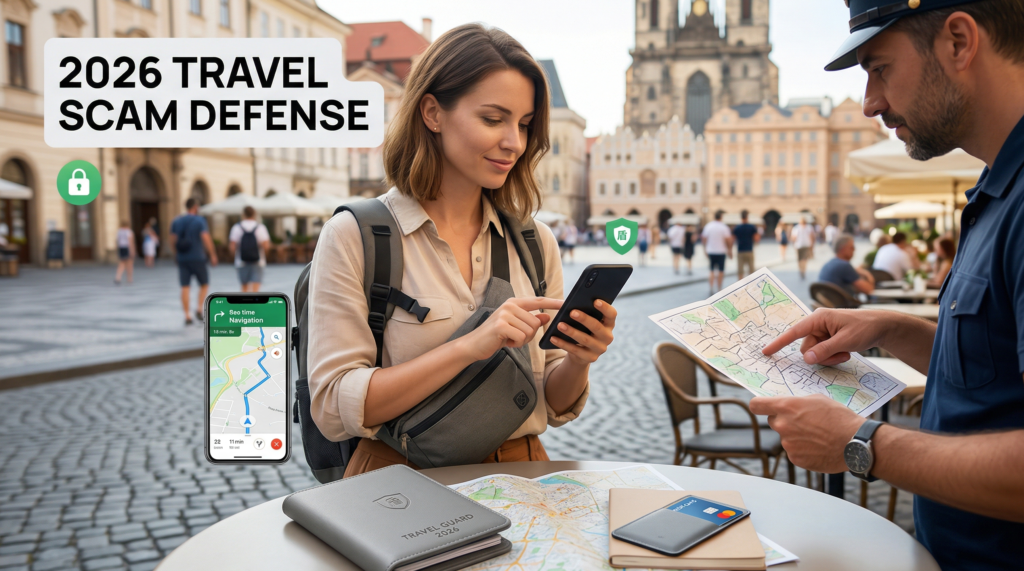
You’ve planned the perfect trip: flights booked, cheap accommodation secured, and your carry-on packed perfectly. ✈️ But one thing can ruin it all in seconds: falling for a travel scam.
Every year, millions of travelers lose thousands of dollars to sophisticated scams targeting even experienced tourists. The good news? Most scams are avoidable if you know what to look for.
This guide covers:
- The most common travel scams in 2026
- How to spot them instantly
- How to avoid getting scammed
- What to do if targeted
From fake taxis and rigged ATMs to booking fraud and romance scams, this is your essential defense guide for safe travel worldwide.
Table of Contents
- Why Even Smart Travelers Fall for Scams
- Airport & Transportation Scams
- Accommodation Scams
- Restaurant & Shopping Scams
- ATM & Money Exchange Scams
- Romance & Friendship Scams
- Tour & Activity Scams
- How to Spot a Scam Every Time
- What to Do If You’re Scammed
- Digital & Online Travel Scams
- Essential Scam Prevention Tools
- Conclusion: Stay Smart and Travel Safe
1. Why Even Smart Travelers Fall for Scams
Even experienced travelers fall victim. Why?
- Unfamiliar Environment: New language, currency, and customs make you vulnerable.
- Desire to Be Polite: Travelers avoid confrontation; scammers exploit politeness.
- Time Pressure: Rushing to flights, hotels, or tours reduces decision-making ability.
- Vacation Mode: Excitement lowers your guard and trust levels rise.
- Language Barriers: Miscommunication makes scams easier to execute.
Golden rule: If something feels off, it probably is. Trust your instincts.
2. Airport & Transportation Scams
Fake Taxi Scam
How it works: Unofficial taxis outside airports charge 3–10× normal fare, use broken meters, or take longer routes. Some work with accomplices to rob you.
Prevention:
- Use official taxi stands or ride-hailing apps (Uber, Bolt, Grab)
- Pre-book transfers when possible
- Agree on price before entering
- Take a photo of the license plate
Red flags: Pushy driver, meter “broken,” inside airport approach.
Broken Meter & Scenic Route
Drivers claim meters are broken or take unnecessarily long routes.
Prevention:
- Track route with Google Maps
- Research typical taxi costs
- Speak up if route seems incorrect
“Hotel Closed” Scam
Driver says your hotel is closed and offers an alternative for commission. Common in India, Thailand, Turkey, Italia, France, Egypt…
Prevention:
- Call hotel directly
- Show your reservation
- Refuse alternative offers
💡 Pro tip: Save your hotel address in the local language on your phone.
3. Accommodation Scams
Fake Booking Scam
Booking via shady sites or email confirmations leads to no reservation or fake property.
Prevention:
- Use reputable platforms: Booking.com, Airbnb, Hostelworld
- Call or email to confirm
- Use credit cards for easier dispute
- Check reviews carefully
Red flags: Wire transfer only, suspicious emails, recently created property with few reviews.
Bait and Switch
Room advertised beautifully, reality is poor. Upsell for extra money.
Prevention:
- Read reviews for photo accuracy
- Video chat for expensive stays
- Take check-in photos/videos
Key Deposit & Fake Damage Claim
Hostels may hold deposits claiming damage; Airbnb hosts may claim post-checkout damage.
Prevention:
- Document room condition on arrival
- Get written receipts
- Respond promptly with evidence
4. Restaurant & Shopping Scams
- Menu Price Scam: Menu shows one price, bill shows another. Photograph menu, confirm prices.
- Bill Padding: Extra items added automatically. Track orders, check bills.
- Fake Designer Goods: Street vendors sell counterfeit items. Buy only from official stores.
- Gem/Carpet/Art Scam: Friendly shop owners pressure you into overpriced purchases. Research independently, never buy impulsively.
5. ATM & Money Exchange Scams
- ATM Skimming: Devices copy your card and PIN. Use bank ATMs, cover keypad.
- Helpful Stranger Scam: Stranger offers help and steals card. Never accept help, call bank immediately.
- Currency Conversion Scam: Always choose local currency. Let bank handle conversion.
- Street Money Changers: Count money yourself, avoid shady exchanges.
6. Romance & Friendship Scams
- Holiday Romance Scam: Quick relationships, urgent money requests. Never send money.
- Friendship Bracelet/Gift Scam: Free item becomes forced payment. Refuse politely.
- Petition Scam: Distracted by “charity” while pickpocketed. Keep walking, stay alert.
7. Tour & Activity Scams
- Fake Tour Guide: Offers “free tour” then demands high tips. Book through official companies.
- Overpriced Tickets: Buy directly from official offices.
- Scooter/Motorbike Damage: Document vehicle condition, inspect with owner, pay insurance if available.
- Fake Police Fine: Ask for official ticket, do not pay cash on spot.
8. How to Spot a Scam Every Time
- Too good to be true
- Pressure & urgency
- Unsolicited approach
- Cash only / unusual payment
- Emotional manipulation
PAUSE Method
- P – Pause
- A – Ask questions
- U – Understand terms
- S – Search reviews
- E – Exit if needed
9. What to Do If You’re Scammed
- Get to safety
- Document everything
- Report to local police
- Contact bank
- Contact embassy if necessary
For credit card fraud: dispute charges, request replacement card.
For stolen cards/cash: freeze accounts, contact emergency services.
10. Digital & Online Travel Scams
- Fake Booking Websites: Type URLs manually, check HTTPS and padlock
- Phishing Emails: Don’t click links; log in directly
- Fake WiFi: Use VPN, avoid sensitive activities on public networks
11. Essential Scam Prevention Tools
- Apps: XE Currency, Google Maps, TripAdvisor, Banking apps (alerts)
- Physical security: Money belt, RFID wallet, document copies, door stop alarm
12. Conclusion: Stay Smart and Travel Safe
Scams are an unfortunate reality of travel, but awareness is your best protection.
Remember:
- Trust your instincts
- Avoid pressure
- Verify everything
- Walk away if unsure
Your trip deserves safety and peace of mind. Share your experience in the comments to help fellow travelers stay safe.